
Office-chair advice often describes fitted carpet, which cannot slide across a floor. A loose rug adds a second problem: the chair can move the whole textile as well as wear its surface. Before choosing wheels or a mat, decide whether the rug needs to sit in the chair's path at all.
Three different ways a chair changes a rug
Crush. A seated person's weight reaches the rug through a few small caster contacts. Repeated pressure can leave flattened tracks in pile. Some pile recovers after the load is removed; some remains changed. Fiber, density and previous wear all matter, so a fixed recovery promise would be misleading.
Abrasion. Rolling wheels and trapped grit wear yarns. Vacuuming the chair path and casters helps remove the grit, but worn-away pile cannot be restored by brushing. A repair specialist may be able to reweave a hand-knotted rug; repair depends on the particular foundation and the cost of the work.
Displacement. A loose rug can creep or ripple as the chair moves. A raised edge is both awkward to cross and a trip point. A floor-compatible pad may help hold it in place, but test the whole chair movement rather than assuming that a nonslip label settles it.
The caster question is product-specific
Chair manufacturers commonly offer hard wheels for carpet and softer tread for hard floors. Herman Miller also describes a wheel suitable for low-to-medium pile carpet and hard surfaces; Steelcase says some soft casters fit both. The product rating tells you where the chair rolls. It does not tell you whether the wheel will leave no mark on a valuable, loose area rug.
| Option | What it can help with | What to check |
|---|---|---|
| Casters rated for your surface | Rolling effort and floor compatibility | Pile height, wheel width, chair maker's advice and visible wear |
| Larger caster | May cross a low pile or edge more easily | Fit with the chair stem and whether it still catches the rug |
| Chair mat | Separates wheels from pile | Mat underside, rug compatibility, movement and trapped grit |
| Firm compatible rug pad | Helps a loose rug stay flat | Floor finish, pad movement and total height under the chair |
There is no verified universal rule that a large, soft caster is best on every rug. The manufacturers' specifications do not establish one. Try the chair gently on a sample or inconspicuous area, then inspect the pile and rug position after normal use. If the rug is valuable, keeping wheels off it is the lowest-risk choice.
Be careful with chair mats
A mat sold for fitted carpet often has a studded underside to keep it from moving. Those studs may not be suitable for a portable woven rug. A smooth-backed mat avoids the studs but may slide; a heavy rigid mat can also hide soil and compression beneath it. Check both the mat specification and the rug's backing, and lift the mat regularly to inspect and vacuum.
The easiest layout change
Put the rug outside the chair's rolling zone: beneath a reading chair, in front of shelves or in the other half of the room. You keep the warmth and visual definition without making the rug a chair surface.
If a mat or new caster does not keep the rug flat, stop using that combination. Do not use adhesive grippers on a rug or floor without checking that both makers allow them.
Measure the chair, then the rug
The desk width does not describe the chair's travel. Sit down, roll back as far as you do to stand, then turn toward drawers or shelves. Mark the outside caster positions. Add a practical margin so the wheels do not hit the edge on every movement. Either keep all casters on the rug throughout that path, or place the rug beyond the path.
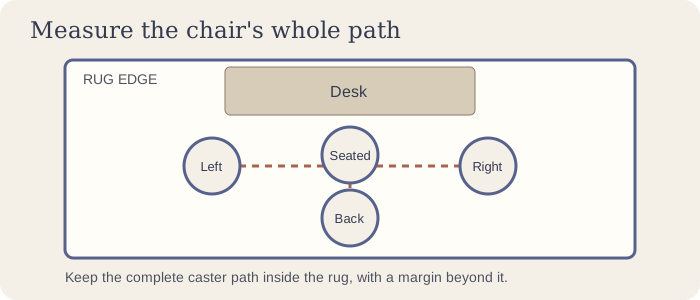
An edge caught repeatedly by a caster can curl even when the middle of the rug stays flat. See rug sizes for room measurements and home office rugs for the broader layout and sound question.
If a track has already appeared
Vacuum out grit and let compressed pile rest. For light flattening, follow the rug maker's care guidance before gently grooming with a soft brush. Avoid soaking an unknown rug or putting a hot iron on it: dye, backing and foundation may respond differently. A persistent worn track calls for a rug repair assessment, not a stronger home treatment.
No independent test in the cited material compares caster types on hand-knotted, tufted and flatwoven area rugs. The recommendations above use manufacturers' stated floor ratings and observable wear mechanisms, with that limit made explicit. A flatweave removes pile-crush concerns but can still abrade or shift; it is one option, not a guarantee.
Common questions
Will an office chair damage an area rug?
Repeated rolling can flatten pile, abrade fibers and push a loose rug out of position. The outcome depends on chair weight and use, caster design, pile, construction, grit and whether the rug is kept flat. There is no reliable time to damage for every rug.
Are soft casters always better for rugs?
No. Chair makers often specify hard casters for carpet and soft-tread casters for hard floors, with some dual-surface options. Those ratings do not establish which caster preserves a particular loose rug. Check the chair maker's guidance and test movement on your rug before replacing the wheels.
Can I put a spiked carpet chair mat on a rug?
A studded mat is designed to grip fitted carpet. On a loose or valuable rug, the studs can press into the pile or backing, so ask the mat and rug makers about compatibility. A smooth-backed mat may slip; neither type is a universal fix.
How large should a rug under a desk be?
Mark the chair's full path while seated, pushed back and turned sideways. Keep every caster within the rug in those positions, or place the rug entirely outside the rolling zone. A rug edge in the wheel path curls and wears quickly.