
Hang a rug on the wall the way museums do it: with the rug's full weight spread evenly along its top edge, never pinned at a few points. For most rugs that means one of two methods — a hook-and-loop strip sewn to the rug's back and mated to a wall-mounted batten, or a fabric sleeve sewn across the back with a rod slipped through it. That even distribution is the whole game: a rug hanging from nails, tacks, or a couple of clips is a rug slowly tearing itself apart under its own weight.
This is the display half of rug DIY: that guide covers making rugs — braiding, latch hook, punch needle, tufting, weaving. Here we assume the rug already exists and deserves better than a nail through the pile.
The short answer
For a valuable, antique, or heavy rug: hook-and-loop tape hand-sewn to a muslin strip on the rug's back, pressed onto the mating tape on a wooden batten screwed into studs. It is the conservation standard, reversible, and puts zero holes in the rug. For a light flatweave: a sewn sleeve with a rod, or padded rug clips. Skip tack strips and nails on anything you would hate to damage.
Choose the method by the rug, not the room
Different rugs fail in different ways, so start with what you are hanging:
| Rug | Best method | Why |
|---|---|---|
| Light flatweave (kilim, dhurrie, soumak) | Padded clips, or sleeve + rod | Low weight; clips are easy and reversible if the jaws are padded |
| Sturdy modern hand-knotted rug, medium weight | Sleeve + rod, or hook-and-loop + batten | Either distributes the load; the batten scales better as size grows |
| Heavy tribal or thick-pile rug | Hook-and-loop + batten into studs | Maximum load spread; add a second strip across the center back for very heavy pieces |
| Antique, fragile, or high-value | Hook-and-loop + batten, then stop and read the warnings below | Reversible and even; anything else risks the piece |
| Renter / no drilling allowed | Adhesive hooks holding a batten, tension rod, or leaning | No holes in the wall; keep the weight modest |
If it might be hand-knotted, check how to tell first — the answer changes what the rug can tolerate.
- The one rule
- Support the full width of the top edge. Point loads — nails, tacks, a few clips on a heavy rug — stretch and distort the foundation over time.
- Weigh it first
- Step on a bathroom scale holding the rug, then without it. A large wool rug is heavier than it looks, and the hardware must be rated for it.
- Call a professional when
- The rug is antique, fragile, or genuinely valuable; the wall is plaster, brick, or tile; or the rug is too heavy to lift safely with two people.
The four methods, explained
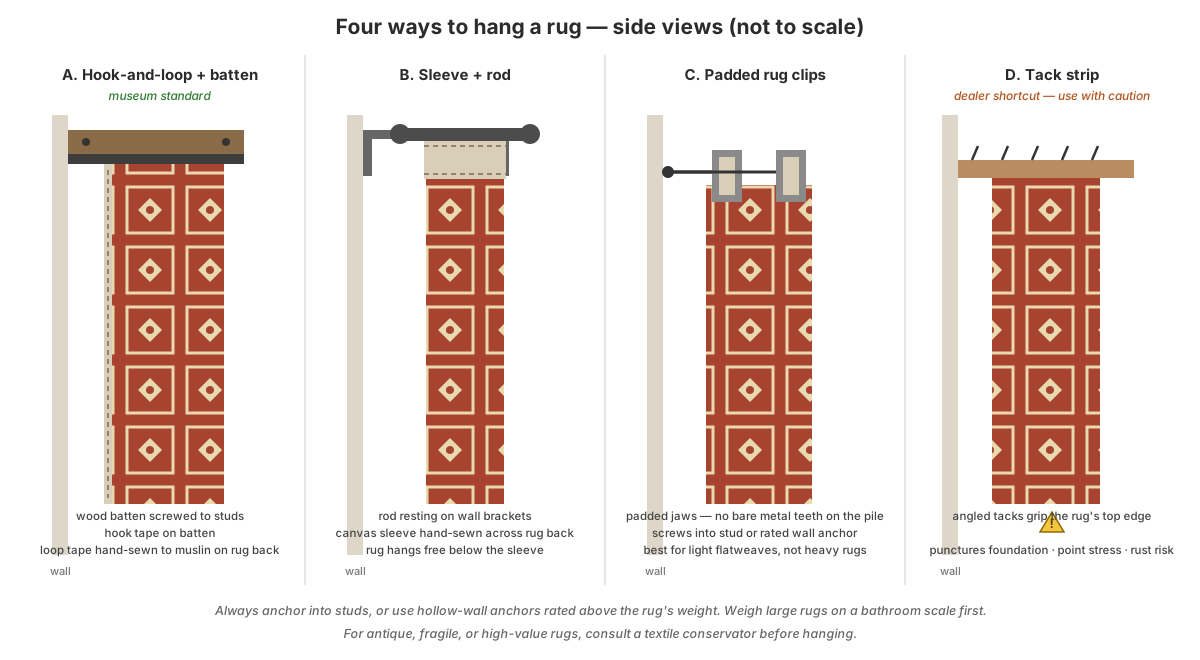
Hook-and-loop and a wall batten — the museum standard
This is how textile conservators hang rugs and tapestries, and the Canadian Conservation Institute publishes the full method. Sew the soft loop side of hook-and-loop tape to a strip of prewashed cotton muslin (or cotton tape), then hand-sew that strip across the back of the rug just below the top edge, stitching through all layers so no single layer bears the weight alone. Never sew the stiff hook side to the rug, and never stick tape directly to the fibers — tape goes on fabric, fabric goes on the rug.
The mating hook side is fixed to a wooden batten — a flat slat of sealed hardwood — screwed into wall studs. Press the rug's loop strip onto the batten and it hangs, adjustable side to side until it sits straight. For very heavy textiles, add a second prepared strip across the center back to share the load.
Why it wins: the weight spreads across the entire width, nothing pierces the rug, and the whole thing is reversible — peel the rug off and the only thing on the textile is a hand-sewn fabric strip. It is the right answer for antique rugs, vintage rugs, heavy tribals, and anything you could not replace.
Fabric sleeve and rod
Sew a tube of canvas or muslin horizontally across the back of the rug near the top, stitching through all layers, and slide a wooden dowel or metal rod through it. The rod rests on two wall brackets. Quilt hangers have used this method for generations, and conservation guides describe it alongside the hook-and-loop system.
It is simple and sturdy, and the visible rod can look intentional. Keep it to medium-weight rugs: the rug hangs from the sleeve's stitching line, so sew generously. Note the sleeve adds a bump across the top of the rug's back, which matters if the piece might one day go back on the floor.
Padded rug clips
Metal clips with padded jaws grip the rug's top edge; each clip screws to the wall. They are quick, repositionable, and fine for light flatweaves — kilims, dhurries, soumaks.
The padding is non-negotiable. Bare metal teeth crush pile, snag yarns, and leave permanent dents. Buy textile clips with soft jaws, space them every foot or so, and skip them for heavy or fragile rugs — clips are point loads by definition, and gravity never stops pulling.
Tack strips — the dealer shortcut
A tack strip is a thin board with angled tacks screwed to the wall; press the rug's top edge onto the tacks and gravity does the rest. Cheap, fast, and everywhere in dealer how-to guides — and the method most likely to damage a rug worth keeping.
Why tack strips are risky
Each tack is a puncture through the foundation and a point of concentrated stress. On a hand-knotted rug, tacks can break warp threads; on any rug, uncoated tacks rust and leave orange stains that do not come out. Tack strips are acceptable for a cheap flatweave you consider expendable. They do not belong on hand-knotted, antique, or valuable rugs — which is exactly where dealers reach for them, because it is fast.
What never to do to a valuable rug
Some damage cannot be undone:
- Nails or staples through the pile. Every puncture is permanent, and the rug's weight hangs from those holes, enlarging them over time.
- Adhesive, glue, or double-sided tape on the fibers. It bonds to yarn, yellows, attracts dirt, and tears pile on removal. Adhesive belongs on the wall hardware, never on the rug.
- Tack or carpet-gripper strips on hand-knotted or antique pieces. See above.
- Hanging by the fringe. Fringe is the exposed warp — the rug's structural skeleton. Hanging from it is asking the skeleton to carry the body.
- Wire across the back like a picture frame. The center sags, the corners pull, and the rug distorts into a smile.
- Direct sunlight, or above a fireplace or radiator. Light fades dyes (compare the front to the back once a year — the back never lies), and heat plus soot embrittle wool.
If the rug is antique, fragile, or worth real money, talk to a textile conservator before you hang it. They will assess the foundation, recommend a mounting method, and tell you honestly if the piece should not hang at all — a consultation costs less than repairing a torn foundation.
Hanging day: hardware and safety
- Weigh the rug. Bathroom scale: you with and without it. Size the hardware from there — brackets, batten screws, and anchors should be rated comfortably above the rug's weight, not exactly at it.
- Find the studs. A stud finder plus a pilot hole to confirm. Batten screws and rod brackets go into studs whenever possible; that is the difference between a secure hang and a slow-motion collapse.
- No stud where you need one? Use hollow-wall anchors rated above the rug's weight — the toggle or molly-bolt kind, not cheap plastic cones. In plaster, brick, or tile, drill with a masonry bit or hire it out; cracked plaster is a miserable repair.
- Two people, always, for anything larger than a small accent rug. One holds the rug's weight; the other seats it on the batten or rod.
- Level the batten, not the ceiling. Old houses settle; a level reads true even when the ceiling does not. Sight along the rug's bottom edge before you call it done.
Vacuum the rug before it goes up — back and front, suction only, no beater bar — so you are not sealing dust behind it for years. Our rug-cleaning guide covers the safe method.
Renter-friendly options
No drilling does not mean no rug on the wall:
- Adhesive hooks holding a batten. Stick heavy-duty adhesive hooks or picture-hanging strips to the wall, rated above the rug-plus-batten weight, and rest a lightweight batten or rod on them. Works for light to medium rugs; heat and humidity weaken adhesive bonds, so check the rating.
- Tension rod in an alcove or window recess. Combine with the sleeve method for a clean, fully reversible hang.
- Lean it. A large rug leaned against the wall reads as intentional in the right room — no holes at all. Give it a stable base and keep it out of high-traffic bump zones.
- Existing curtain rod + padded clips. If the rod is already there and sturdy, textile clips turn it into a hanger for light flatweaves.
The rug-side rules do not change: no adhesive on fibers, no nails through pile, full-width support for anything heavy.
Where to hang it
Placement is preservation. Keep hung rugs out of direct sun — south- and west-facing walls are the worst offenders — and away from heating vents and fireplaces. Interior walls are kinder than exterior ones, which swing with outdoor temperature and humidity. Once a year, unhook one corner and compare the front to the back: if the front has faded, the rug is telling you to move it or rest it. Museums rotate their textiles, and your rug deserves the occasional rest too.
Common questions
Can I use adhesive hooks or strips to hang a rug?
On the wall, yes — for light rugs. Stick adhesive hooks or picture-hanging strips to the wall itself to hold a batten, rod brackets, or clips, and respect their weight ratings (heat and humidity weaken them). Never stick adhesive directly to the rug: it bonds to fibers, leaves residue, and can tear pile when removed.
Will hanging a rug damage it?
Any hanging keeps the rug under constant tension from its own weight, which is why safe methods spread the load across the full top edge instead of a few points. Check once a year for sagging, stretching, or fading — compare the front to the back, which never sees light. Museums rotate textiles off display; at home, plan to rest a hung rug flat or rolled every few years if you want it to last decades.
How do I hang a heavy rug on drywall?
Screw the batten or rod brackets into wall studs — use a stud finder and confirm with a pilot hole. If no stud lines up, use hollow-wall anchors rated comfortably above the rug's weight. Weigh the rug first on a bathroom scale (weigh yourself, then yourself holding the rug). Hang anything larger than a small accent rug with two people, and call a professional installer for very heavy or valuable pieces.
Can I hang a rug without putting holes in the wall?
Yes. Lean a large rug against the wall for a zero-hole gallery look, use a tension rod inside a window recess or alcove with the sleeve method, or hold a batten with adhesive hooks rated for the weight. Padded rug clips on an existing curtain rod also work for light flatweaves.